
Catoosa County Bench Warrants Explained
A bench warrant is a court order tied to a duty someone already owes in an open case. Catoosa County lays out the process most clearly in municipal traffic matters. Ringgold warns that a ticket left unpaid or unanswered past its date can bring a bench warrant for failure to appear, often shortened to FTA. Fort Oglethorpe puts it in plainer terms. Skip a required appearance there and an arrest warrant may follow. Neither outcome is automatic in every case. Only the issuing court can say what step the judge actually took. Georgia records sometimes use the word “capias” instead. Catoosa County's own material does not define a separate local capias status. So treat the terms carefully. Never assume capias, FTA, contempt, and bench warrant all mean the same thing. A clerk can name the exact process shown in a case and say whether it remains open, was recalled, or was changed.
Catoosa County City FTA Rules
Ringgold and Fort Oglethorpe run separate municipal courts, so their failure-to-appear rules do not travel between them. The Ringgold Municipal Court requires city-limits tickets to be paid or answered by the listed date. Miss it and a $30 contempt charge applies, with a possible license suspension or arrest warrant. A ticket marked for a mandatory appearance still demands attendance. Questions go to the Ringgold court clerk at 706-935-1506. The Fort Oglethorpe Municipal Court posts different terms: a $25 late or contempt fee per traffic citation, and a $200 contempt fee once an FTA warrant has issued. Those amounts can change, so confirm them with Court Services at 706-866-2989 before acting. Two local rulebooks like these are why a generic search cannot replace the issuing clerk when you chase a Catoosa County bench warrant. The official Ringgold court page shows the city-specific route that can lead to one.
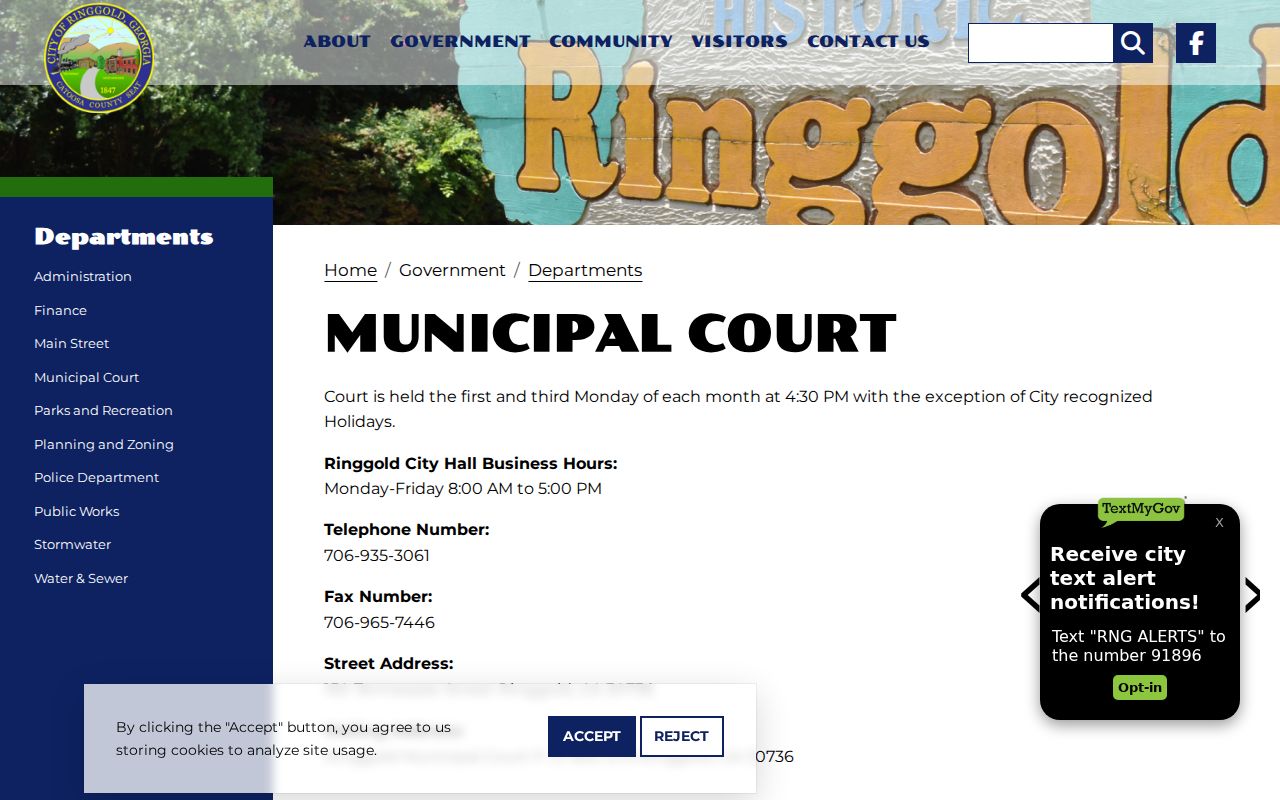
That schedule, those payment options, and those FTA terms belong to Ringgold cases alone. They do not govern Fort Oglethorpe or Catoosa County State Court matters.
How Catoosa County Bench Warrants Are Issued
Issuance rests with the judge. In a municipal citation case, the court first holds a ticket, a response date, and any requirement to appear. If the person does not comply, the options open up. The court may record contempt, report an FTA for license action, issue a bench or arrest warrant, or take more than one authorized step. No fixed grace period applies. The public pages set no single grace window across all Catoosa County courts.
The basic flow is: required date missed → court reviews the case → judge may issue a warrant → clerk records the action → law enforcement may serve it → the court later confirms any recall or resolution. A payment screen or calendar may lag behind the court record. It also may show a ticket without stating whether a warrant exists. That is why the clerk remains the key source.
Catoosa County Warrants and License Holds
A license suspension for failure to appear is not itself a bench warrant. The Georgia Department of Driver Services describes an administrative path that starts after a court reports an FTA and notice goes out. A Catoosa County court may also take a warrant step. One record does not prove the other, so check each separately.
| Record | Who Controls It | What Confirms It |
|---|---|---|
| Bench warrant | Issuing judge and court | Current court or sheriff response |
| FTA entry | Court handling the citation | Clerk’s case record |
| License suspension | Georgia DDS after court reporting | DDS status and court release |
Once a cited matter is resolved, the court must send an electronic release when DDS action applies. Paying the balance does not wipe out a suspension or a warrant on the spot. Do not drive on that assumption. The official DDS guidance spells out this separate Catoosa County FTA consequence:
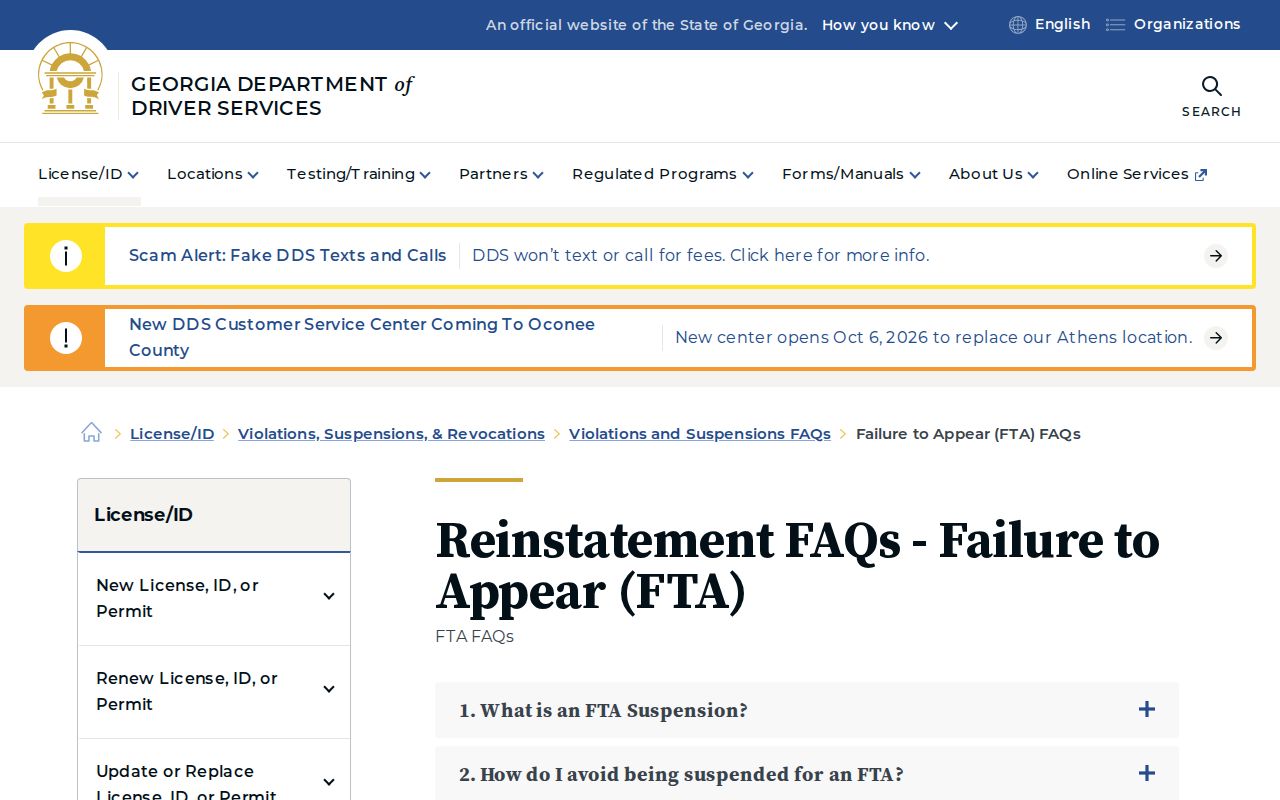
After the court acts, use it to check the Catoosa County warrant and use DDS to confirm the license record.
Bench Warrants and Arrest Warrants Compared
A bench warrant grows out of a duty in a case already before the court. An arrest warrant starts differently. It begins with a claim that an offense occurred and a judicial finding under the probable-cause process. Catoosa County's Magistrate materials say criminal warrants issue through the Magistrate's Office. They then go to the Sheriff for service. Municipal FTA rules start elsewhere: a missed response in a city case.
| Feature | Bench Warrant | Arrest Warrant |
|---|---|---|
| Typical trigger | Missed court duty, FTA, or contempt | Probable cause of an alleged offense |
| Case setting | Usually an existing court matter | May begin a criminal custody process |
| Issuing authority | Judge handling the pending matter | Judge or magistrate reviewing an application |
| Next step | Contact issuing court and counsel | Confirm source and plan a lawful response |
Service, recall, bond, or later court action can change either record in Catoosa County. Confirm current status with the issuing court.
Verify a Catoosa County Bench Warrant
Catoosa County publishes no public sheriff warrant roster online. Georgia's official guidance sends people to the local sheriff instead. Have a first and last name plus date of birth ready before you call. Offices differ on disclosure. Some share warrant details by phone, while others require an in-person visit. Ask the office to confirm its channel before sending any sensitive data.
- Identify the citation, case, city, and scheduled court when possible.
- Call the issuing clerk and ask what identifying details the office requires.
- For sheriff verification, contact the Catoosa County Sheriff’s Office at 706-935-2424 or Sheriff Records at catoosarecords@catoosacountyga.gov.
- Ask the office to state the current status and the court that controls the next step.
- Seek legal advice before an in-person inquiry if immediate custody is a concern.
Georgia also warns that a person who shows up in person may be taken into custody if a warrant turns up. Plan that visit with a lawyer rather than dodging it.
Resolving a Catoosa County Bench Warrant
Only the issuing judge can recall a Catoosa County bench warrant. The sheriff may verify or serve one, but it cannot promise the court will remove it. That power stays with the court. A lawyer can tell you whether a motion to recall or quash fits the case. “Recall” means the court withdraws the warrant; “quash” means a judicial order sets it aside.
- Confirm the warrant and its issuing court through an official channel.
- Ask the clerk what the docket requires, without asking the clerk for legal advice.
- Consult counsel about appearance, surrender, bond, or a motion to recall or quash.
- Complete the court’s required step, such as a reset, appearance, or approved payment.
- Obtain fresh confirmation from the court and, if needed, verify a DDS release separately.
Caution: Payment alone does not prove a Catoosa County bench warrant has been recalled; get current confirmation from the issuing court.
Want the bigger picture before you act? The Catoosa County warrant records overview shows how the court and sheriff roles fit together.
Catoosa County FTA Records Requests
Catoosa County takes public record requests through a GovQA portal that covers county government, sheriff, and court records. You need an account. The portal tracks requests, allows follow-up, and sends email messages. It is not a fast warrant status-check tool. It suits a defined record better, such as a non-exempt policy on warrant entry or aggregate monthly failure-to-appear counts by issuing court. Under the Georgia Open Records Act guidance, an agency generally responds within three business days or explains the timetable, likely cost, or legal basis for withholding. Search, redaction, and copying charges may apply. Ask for electronic copies and a fee estimate. Juvenile and pending-investigation material may be restricted or redacted, and a denial does not establish that a warrant exists. Note: Request a maintained record, not new research or a custom list the agency does not keep.
Finding the Court That Issued the Warrant
Start with the court named on the citation or notice. Catoosa County State Court handles county misdemeanor and traffic cases. Call the clerk, Tracy Hullender Brown, at 706-935-4231. The office sits at 875 Lafayette Street in Ringgold. The Magistrate Court, at 877 Lafayette Street and 706-935-3114, may hold the record instead, so have a clerk confirm.
Ringgold Municipal Court
150 Tennessee Street, Ringgold
706-935-1506
Fort Oglethorpe Municipal Court
500 City Hall Drive, Fort Oglethorpe
706-866-2989
Catoosa County State Court
875 Lafayette Street, Ringgold
706-935-4231
Ringgold court meets on the first and third Monday at 4:30 p.m., except holidays. Fort Oglethorpe Court Services posts weekday office hours. Schedules and staff details change, so confirm on the official court page before visiting a Catoosa County courtroom.
Catoosa County Bench Warrant Terms
Status words can point to different events. Catoosa County publishes no warrant-status legend, so do not translate one term into another without the issuing office.
- FTA
- Failure to appear or respond as the court directed.
- Bench warrant
- A judge’s order that may follow a missed court obligation.
- Recalled
- The court has withdrawn the warrant through a later action.
- Quashed
- The court has set the warrant aside by judicial order.
- Validated
- A law enforcement records check that does not itself mean public access or prove service.
Sheriff Records says its terminal agency coordinator enters and validates warrants in GCIC and NCIC. Those are law enforcement systems, not public search portals. A calendar row, payment screen, or old copy can also be out of date. Whatever confirms a Catoosa County warrant should name the source and the time of the check.